

Critical Infrastructure Cyberattacks: How One Breach Can Disrupt Businesses That Were Never Targeted
- MAX Security
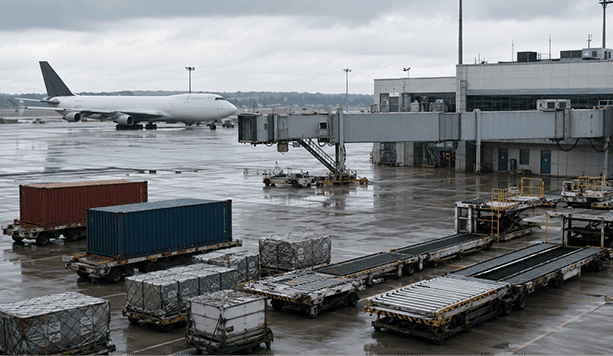
A cyberattack no longer has to take down an entire power grid, port, hospital, or factory to disrupt the businesses connected to it. It only has to hit a system those operations rely on, leaving companies that were never targeted dealing with the fallout.
As critical infrastructure becomes more digitized and more dependent on external providers, cyberattacks on critical infrastructure are becoming a business continuity risk with consequences far beyond the first compromised network.
What this means for operational risk:
- A breach can start in one system and disrupt multiple operators.
- Vendor exposure is becoming a core third-party cyber risk.
- AI and cybercrime marketplaces are making attacks faster.
- Geopolitical tensions are turning cyber incidents into business risk.
How Cyberattacks Spread Through Supply Chains
The old idea was simple: protect your own systems, harden your own network, keep the bad guys out. That world is gone.
Critical infrastructure now runs on shared providers, outsourced platforms, remote maintenance, software vendors, and suppliers most people never see. One weak link is enough. One compromised vendor can hit airports, factories, hospitals, logistics networks, and public services.
For example, in September 2025, hackers targeted Collins Aerospace check-in and boarding systems, disrupting operations at Heathrow, Berlin, and Brussels. Passengers faced long queues, delays, and cancellations while airports shifted to manual processes.
That is how a technical breach becomes a business disruption. The damage moves from one system into the real world: a factory floor gone quiet, a shipment stuck in the wrong place, a hospital forced back to manual work. It moves fast because the systems are already connected.
The same pattern plays out across supply chains. Disruption moves through delayed shipments, clogged warehouses, inventory gaps, slowed production, and rising costs. For pharmaceuticals, electronics, and industrial components, even small delays can become expensive quickly.
The 2025 Jaguar Land Rover cyberattack showed what that looks like at scale. The Cyber Monitoring Centre estimated a £1.9 billion UK financial impact and said more than 5,000 UK organizations were affected. A cyberattack became a manufacturing problem, a logistics problem, and a supplier problem at the same time.
Why AI and Cybercrime Marketplaces Are Making Cyberattacks Faster
Cybercrime used to require skill, patience, and infrastructure. Now ransomware-as-a-service and access-broker markets have turned cybercrime into a supply chain of its own.
Cyberattacks can be bought, rented, automated, or outsourced. One group can steal credentials. Another can sell access. Another can provide malware. Another can run extortion.
AI adds speed to that machinery. It can map exposed systems, scrape public data, personalize phishing, imitate trusted senders, accelerate the move from vulnerability to exploitation, and scale activity across multiple targets.
In 2025, Anthropic disclosed a cyber-espionage campaign in which attackers used Claude Code to help target roughly 30 organizations across technology, finance, and government sectors. The point is not that AI created the threat. It made the operation faster, broader, and easier to scale.
Why Cyberattacks Create Legal, Insurance, and Business Continuity Risk
When an attack is accelerated by AI and routed through brokers, affiliates, criminal marketplaces, and state-linked intermediaries, attribution gets messy.
And when attribution is unclear, legal and insurance questions become harder to answer. What was covered? What was excluded? Who was responsible for the failed control? Who has to notify customers, regulators, or partners?
The technical breach is only the beginning. The real cost often arrives later, in regulatory scrutiny, contested claims, lost trust, and strategic exposure.
If governance is weak, response plans are untested, third-party oversight is thin, and access controls are messy, the conversation after an attack becomes harder to manage.
How Geopolitics Raises the Stakes of Critical Infrastructure Cyberattacks
Geopolitics turns cyber weakness into business risk because the same vulnerabilities can be used for pressure, espionage, disruption, and narrative control.
State-linked actors want access because access tells a story. Shipping records show routes. Procurement files show dependencies. Internal systems reveal weak suppliers, critical facilities, and the places where one well-timed disruption can do real damage.
The timing of attacks is also part of the strategy. A breach during an acquisition, sanctions announcement, regional crisis, or supply shortage can do more than interrupt operations. It can slow negotiations, unsettle investors, raise insurance questions, and make an already fragile moment harder to manage.
The target is not only infrastructure. It is confidence, attention, and control of the narrative.
This is where cyber risk starts to look less like an IT problem and more like geopolitical exposure. The breach may be technical. The consequences are commercial, legal, reputational, and strategic.
How to Reduce Critical Infrastructure Cyber Risk to Business Continuity
Reducing critical infrastructure cyber risk starts with reviewing the suppliers, systems, access points, and data dependencies that could allow one breach to spread into wider business disruption.
| Risk area | What to review |
|---|---|
| Third-party dependency | Shared providers, cloud systems, industrial software, logistics platforms, and maintenance contractors |
| Access control | Privileged accounts, contractor access, remote support tools, and unused permissions |
| Network containment | Segmentation between business systems, operational technology, supplier portals, and sensitive data |
| Data integrity | Procedures for verifying records, outputs, and safety-critical data before operations resume |
| AI-enabled fraud | Payment changes, supplier requests, executive instructions, and urgent approvals |
| Insurance exposure | Business interruption, third-party disruption, state-linked attacks, exclusions, and notification thresholds |
| Geopolitical risk | Suppliers, routes, facilities, and sectors exposed to conflict, sanctions, or politically motivated cyber activity |
Know Where the Disruption Can Spread Before It Does
A cyberattack may begin in a network, but the damage rarely stays there. It moves through suppliers, facilities, routes, platforms, and operating environments that many organizations only understand after something breaks.
That is the real resilience question: not only whether a system is secure, but where disruption could travel if it fails.
For organizations with exposed suppliers, facilities, routes, or regional operations, MAX provides tailored monitoring and intelligence support to help identify where cyber disruption may create business risk before the next incident hits.
THE MAX MONTHLY
Get actionable intelligence, expert analysis, & key event updates straight to your inbox.
Sign up →