

MAX Intelligence: Venezuela Faces Uncertainty Following Maduro’s US Capture
- MAX Security
Table of Contents
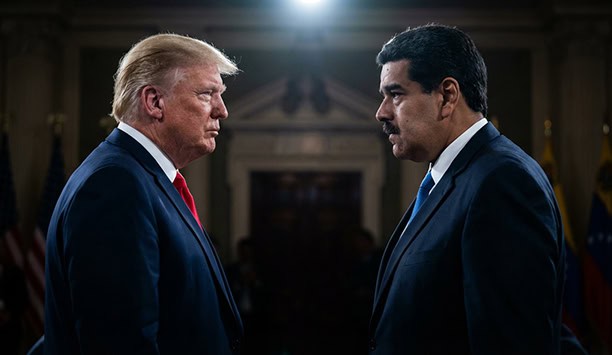
Maduro’s capture triggers extreme uncertainty; Trump signals US oversight as Delcy Rodriguez is constitutionally mandated as interim president.
Executive Summary
-
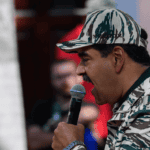
Venezuelan President Nicolas Maduro, captured by US, will reportedly stand on trial in the US for drug trafficking and terrorism charges. Meanwhile, Venezuelan authorities have demanded proof of life and his immediate return, while US President Donald Trump indicates potential for US to run Venezuela.
-
Meanwhile, Maduro’s Vice President Delcy Rodriguez is constitutionally mandated to take over as interim president in Maduro’s absence. There continues to remain extensive uncertainty amid the political and security landscape with Trump indicating potential for a second wave.
-
Regionally, vocal backlash against Washington’s unilateral action is expected to increase, in addition to prompting temporary commercial and transportation disruptions across the region, specifically in Venezuela’s proximity.
-
Additionally, political scrutiny denouncing the US military actions are expected in the US over the coming days, including in Washington, DC. This is likely to manifest as anti-Trump protests in the US as well as in other countries across the region.
Current Situation
-
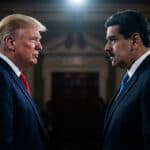
US President Donald Trump stated in a press conference regarding US actions in Venezuela that the US is “going to run” Venezuela “with a group” until a “proper transition of power” can take place.
-
He also indicated that US oil companies will go to Venezuela to repair the country’s oil infrastructure. Trump further stated that if needed, the US was prepared for a second wave of strikes against Venezuela with potential for deployment of troops. As of writing, there are no US troops in Venezuela.
-
Reports indicate that following the capture of Venezuelan President Nicolas Maduro and his wife, Cillia Flores, Venezuelan Vice President Delcy Rodriguez has demanded proof of life from the Trump administration. Venezuelan Foreign Minister Yvan Gill has called for the immediate return of Maduro, denouncing Washington’s violation of immunity provisions afforded to heads of state. Trump indicated ongoing conversations with Rodriguez.
-
Reports citing US authorities indicate that Maduro was arrested to “stand trial on criminal charges” in the US and that the US-led strikes in Venezuela on January 3 were deployed to “protect and defend those executing the arrest warrant.”
-
The U.S. attorney general indicated the indictment of Maduro and his wife, including charges of “narco-terrorism and cocaine importation conspiracies” similar to Maduro’s indictment of 2020 on terrorism and drug trafficking charges.
-
Colombian President Gustavo Petro announced the mobilization and reinforcement of troops along Colombia’s border with Venezuela and condemned the US-led aggression against the Maduro administration.
-
Reports also indicate that Brazil’s borders with Venezuela along in Pacaraima in Roraima state has been closed.
-
Further, following the US Federal Aviation Administration’s (FAA) directive, Puerto Rico (US) announced flight cancellations at multiple airports across the island at least until January 5.
-
Additional reports indicate that regional airlines have begun diverting flights south over Colombia and east over the Caribbean Sea, increasing flight times and fuel costs. Further, regional hubs including Bogota, Colombia, Panama City, Panama, and Santo Domingo, Dominican Republic have reported heavier aviation traffic due to diverted flights.
Assessments & Forecast
Venezuela’s domestic landscape
-
The presidential position in Venezuela is currently de facto vacant with Maduro captured. As of writing and amid limited information available, it remains unclear what the implications of Trump’s statement of running the country until a proper transition can take place, will be. Article 233 of the Venezuelan constitution mandates that the Vice President can take charge. Therefore, Vice President Delcy Rodriguez may officially assume executive authority as acting president. While the country has a precedent for interim successions, the latest vacancy of the presidential post by way of the sitting president’s announced capture by an external force marks an unprecedented situation. Therefore, this is expected to trigger considerable uncertainty over how constitutional provisions are interpreted and implemented amid potential US involvement.
-
This uncertainty is likely to be convoluted by the overbearing presence and influence of the military, which in Venezuela functions not only as the guarantor of state security but also as a central political and economic actor. Maduro had reportedly systematically appointed the armed forces into political and economic spheres, including granting senior officers authority over key ministries, state-owned enterprises, ports, food distribution networks, and even segments of the oil sector. This has created strong institutional incentives for military loyalty and bound the armed forces closely to Maduro’s governance. Therefore, Defense Minister Padrino Lopez, a key Maduro ally who now oversees the nation’s security under the ongoing state of emergency, is expected to play a critical role in maintaining the morale and cohesion of the armed forces amid the unprecedented upheaval. Some reports also position him as a potential leader in Maduro’s alleged absence, although this is not a constitutional provision. Another prominent leader with close ties to the military is Venezuela’s Interior Minister Diosdado Cabello Rondon, positioning him as another vital figure.
-
Further, as per Venezuelan law, if a permanent presidential vacancy is confirmed, a new election must be called within 30 days, while the acting president maintains order and continuity in the interim period. While Maduro’s capture is likely to potentially abate the immediate likelihood of additional US land strikes, the potential remains as indicated by Trump. While senior officials will look to avoid US military actions, they are unlikely to readily acquiesce to convening new elections. This will potentially be justified by emphasizing the heightened security needs, the required restoration and stabilization of state institutions, disrupted by the president’s capture, and the necessity of maintaining continuity in critical services like energy, food distribution, and transportation. While Maduro’s allies will seek to preserve the existing power structure, it will be difficult amid potential US involvement in the next steps for Venezuela, as indicated by Trump.
-
That said, the Maduro administration has historically relied on the military for maintaining political control and suppressing dissent. This, therefore, positions Lopez as the Maduro ally most closely capable of directing the military’s continued support. This also puts Cabello as a continued prominent figure. FORECAST: In this case, Maduro’s successor, likely to be VP Delcy Rodriguez, will have to be able to direct the military and maintain relative law and order while navigating any US involvement, preventing additional US military actions. This may involve significant concessions to be allowed to the US, specifically US oil companies, to be involved in Venezuela’s oil sector. Moreover, while Maduro has largely invested in strengthening civil-military relations, there is also a low potential for the military to independently attempt a coup amid the current political uncertainty. However, a military coup and installation of a subsequent government may provide Washington with an additional justification for further involvement and potentially constrain the military’s willingness to act unilaterally.
-
Nonetheless, Maduro’s absence is likely to result in a resurgence of the anti-Maduro opposition movements. Foremost among opposition figures is Maria Corina Machado, the outspoken anti-Maduro leader of Vente Venezuela party, widely considered as Washington’s preferred alternative to Maduro. In parallel is Plataforma Unitaria Democratica’s (PUD) Edmundo Gonzalez Urrutia, whom the US had recognized as Venezuela’s president-elect following the disputed July 2024 general elections and who was also backed by Machado. However, both figures remain in exile. Additionally, while supported by the US, if either figure is appointed as Maduro’s successor, they will face challenges in being able to establish and consolidate power within the current institutional structures. Maduro’s reported capture will nonetheless intensify opposition outreach and encourage opposition supporters. This is expected to include calls for protests, appeals to the armed forces to withdraw support from the Maduro-aligned leadership, and messaging that highlights continued US pressure while framing a potential post-Maduro transition as a pathway to economic recovery. Nonetheless, the potential for the immediate installation of a new president and broader administrative changes remains uncertain, even if an alternative leadership is officially recognized by the US.
-
In the more immediate term, Maduro’s Partido Socialista Unido de Venezuela (PSUV) leadership will look to avoid internal disputes and present a unified front amid the ongoing uncertainty. Accordingly, under the national emergency, and potentially further security-based justifications, the PSUV leadership may impose additional restrictions on the population, including limits on public gatherings, expanded security deployments, tighter controls on media and online communications, and broader enforcement measures aimed at deterring opposition mobilization. Moreover, as seen during Venezuela’s episodes of heightened political tension, authorities are likely to rely on existing legal and security frameworks to detain opposition activists, protest organizers, and prominent critics, particularly those involved in mobilization efforts or public calls for demonstrations.
-
Such actions would likely be intensified and justified on the grounds of preserving public order, preventing unrest, and countering perceived US-backed destabilization efforts. This will manifest as targeted detentions, short-term preventive arrests, and the intimidation of key opposition figures are likely to increase, especially if protests materialize or if calls emerge urging the armed forces to defect. However, large-scale mass arrests may be calibrated to avoid excessive backlash or further US involvement. Moreover, Maduro’s barrio-level governance structures, including Communal Councils and PSUV-aligned local networks, are likely to serve as instruments for maintaining social control, with PSUV leaders expected to increase coordination with local militias, community organizers, and security forces to ensure continued support, monitor dissent, and reinforce political cohesion at the neighborhood level.
-
There is a low likelihood that Venezuela will retaliate directly against US troops or assets in the Caribbean, as such action would risk triggering a significantly escalatory US military response, with Trump already threatening a second wave of strikes. Furthermore, the reported damages from the January 3 strikes, which targeted key military facilities and logistical infrastructure, are likely to reinforce a deterrent effect. Moreover, the existing leadership is likely to prioritize internal security, regime preservation, and consolidation of control over state institutions rather than external confrontation, particularly amid leadership uncertainty and heightened domestic instability. This risk is further reduced with Maduro expected to be transferred and tried in the US, as an alternative PSUV leader would likely seek to avoid actions that could provoke additional punitive measures. As such, Venezuela’s response options remain constrained and are expected to be largely rhetorical or diplomatic, rather than manifesting in direct military retaliation. While US land strikes may remain limited, the ongoing US-led naval blockade is also expected to persist, potentially serving as an additional pressure point on Venezuelan leadership.
Regional landscape
-
The US-led military actions in Venezuela also highlight Trump’s efforts to consolidate Washington as a central actor in regional security dynamics and showcase the US’s capacity to exercise extensive influence within the Western Hemisphere. It is also expected to send a strong cautionary message to regional governments with longstanding anti-US tendencies, especially Cuba and Nicaragua. Overall, these developments are likely to reinforce perceptions among both regional allies and adversaries that the US is prepared to use targeted military force to further its interests, which may potentially encourage pro-US recalibration of security and diplomatic postures across the hemisphere.
-
FORECAST: Regional reactions are expected to focus primarily on border security, migration control, and diplomatic signaling rather than direct intervention. Colombia has already increased security along its border with Venezuela, and other neighboring states, including Brazil, Guyana, and, to a lesser extent, Trinidad and Tobago, are likely to adopt similar measures, particularly to monitor and slow a potential surge in cross-border migration triggered by political instability and security concerns. Additionally, vocal diplomatic backlash against the US’s unilateral use of military force to coerce a change in administration is expected, particularly from left-leaning governments and regional blocs, which are likely to frame the situation as a violation of sovereignty and international law. Nonetheless, no regional actor is expected to engage militarily alongside either the US or Venezuela, or to intervene directly, given the high political, economic, and security costs associated with escalation.
-
Meanwhile, regional civil society organizations engaged in anti-war activism, as well as Venezuelan diaspora groups, are likely to organize protests denouncing the US military actions. Such demonstrations are expected to take place around US Consulates, embassies, and other government buildings, including in Argentina, Canada, Colombia, and Cuba, among others. While these protests are likely to remain peaceful, the rapidly evolving situation and heightened tensions suggests that security measures are likely to be reinforced around official infrastructure, especially around US-affiliated entities.
-
Meanwhile, the US Federal Aviation Administration’s (FAA) prohibition on US civil flights over Venezuelan airspace will likely prompt regional civil aviation authorities and commercial airlines to reassess operational risk, potentially leading to voluntary restrictions, rerouting, or temporary suspensions of flights to and from Venezuela. Flight disruptions might be possible to Curacao, Aruba, Sint Maarten, Georgetown, Guyana, and Bridgetown, Barbados, as well as St Vincent and St Lucia, and Antigua, Barbuda, St Kitts and Nevis, due to the closed airspace. Additionally, the elevated US-Venezuela tensions, coupled with the likely increased naval and coast guard activity, are expected to result in tighter monitoring of shipping lanes in the southern Caribbean and along Venezuela’s northern coast. Commercial vessels, particularly those carrying energy products, may face delays due to enhanced inspections, rerouting to avoid perceived risk areas, or precautionary port restrictions imposed by regional operators and insurers. Moreover, US-led military strikes and interdictions against suspected drug-trafficking vessels in the Atlantic and Pacific, ongoing since late August, are nonetheless expected to continue as part of Washington’s broader counter-narcotics operations.
US Domestic Landscape
-
FORECAST: Meanwhile, in the US, domestic backlash from left-aligned political and civil society groups against the Trump administration’s military action against Venezuela is expected to intensify. This is likely to be amplified by Trump’s electoral “No More War” agenda, creating perceptions of policy inconsistency. As a result, criticism may not be limited to traditional anti-war or progressive groups; some right-leaning factions, including individuals with military or national security backgrounds, could also voice concern over the escalation. Privately conducted polling indicating that an estimated 60-70 percent of US citizens oppose military action in Venezuela somewhat reinforces this. In parallel, ambiguity over whether the operation received congressional authorization, coupled with questions surrounding its legal basis, is likely to fuel broader concerns over executive overreach. The Trump administration may seek to temper such concerns by signaling that no further military escalation is planned in Venezuela. However, given the sustained allegations of Trump exerting such unilateral authority, skepticism over his restraint will likely persist.
-
As evidenced by protests announced on January 3, additional demonstrations against the Trump administration are likely in the coming days. Protests are plausible in cities such as Washington, DC, New York City, NY, Los Angeles, CA, Chicago, IL, Boston, MA, and Atlanta, GA, potentially converging with broader anti-Trump sentiment. This could contribute to a partial resurgence of nationwide organized anti-Trump protests, which had largely subsided in recent months. It may also emerge as a salient factor shaping voter sentiment ahead of the 2026 midterm elections, particularly if the latest escalation generates downstream domestic impacts, such as economic volatility, energy price fluctuations, or renewed immigration pressures.
Recommendations
-
Those operating in Caracas, Venezuela, over the coming hours on January 3 are advised to avoid all travel due to the threat of violence amid the ongoing political and security uncertainty.
-
Avoid all travel in urban centers due to the potential for unrest amid ad hoc pro- and anti-government demonstrations over the coming hours.
-
In light of additional potential airstrikes, if a designated shelter exists, immediately go there. If not, go to a room with as few external walls, windows, and openings as possible, close all openings, and sit on the floor below the window line and near an internal wall.
-
In an open area, lay down on the ground and cover your head with your hands.When driving, safely pull over and follow the above instructions.
-
Remain in position for at least ten minutes or until the sirens have stopped unless instructed otherwise, and stay away from any unidentified objects.
-
For more information on the security situation and assistance, please contact intel@max-security.com.
×
SCOUT
INTEL AI BY MAX SECURITY
Fill in your details to schedule a demo with our team.