
This is Part I of our two-part analysis of security developments on the Korean Peninsula. It examines the current situation and the interests and motivations of key regional stakeholders.
To download Part II of the analysis, covering four escalation scenarios, their probabilities, warning indicators, and potential business impact, click the button below.
Executive Summary
-
Recent developments like North Korea’s constitutional changes eliminating references to Korean unification, South Korea’s shifting defense posture, and a realignment in the position of regional players like China, Russia, and the US, mark a significant shift in security dynamics on the Korean Peninsula.
-
Regional players, including North and South Korea, China, Russia, and the US, appear to be prioritizing near-term regional stability over longer-term outcomes like denuclearization.
-
North Korea is likely seeking to consolidate its nuclear-armed status while using recent constitutional revisions to formalize a “two hostile states” doctrine, providing Pyongyang the leverage to pursue diplomacy with Washington while sidelining Seoul.
-
South Korea is likely pairing conciliatory signaling toward Pyongyang with greater defense self-reliance, particularly through increased operational control over its armed forces and expanded cooperation with Tokyo.
-
The US appears to be increasingly relying on Seoul and Tokyo to shoulder primary deterrence responsibility against North Korea as competing global engagements limit Washington’s regional bandwidth.
-
Russia’s deepening military and technology cooperation with Pyongyang is likely accelerating North Korean military modernization, particularly in nuclear, UAV, and electronic warfare capabilities.
-
China is likely to sustain its economic support for Pyongyang to limit Moscow’s growing influence, avoiding coercive measures that risk pushing North Korea toward Russia.
-
Travel to South Korea, including Seoul, can continue at this time while adhering to standard security protocols. We advise against nonessential travel to North Korea due to the uncertain security situation, extensive surveillance, and the country’s strict laws affecting visitors.
Introduction
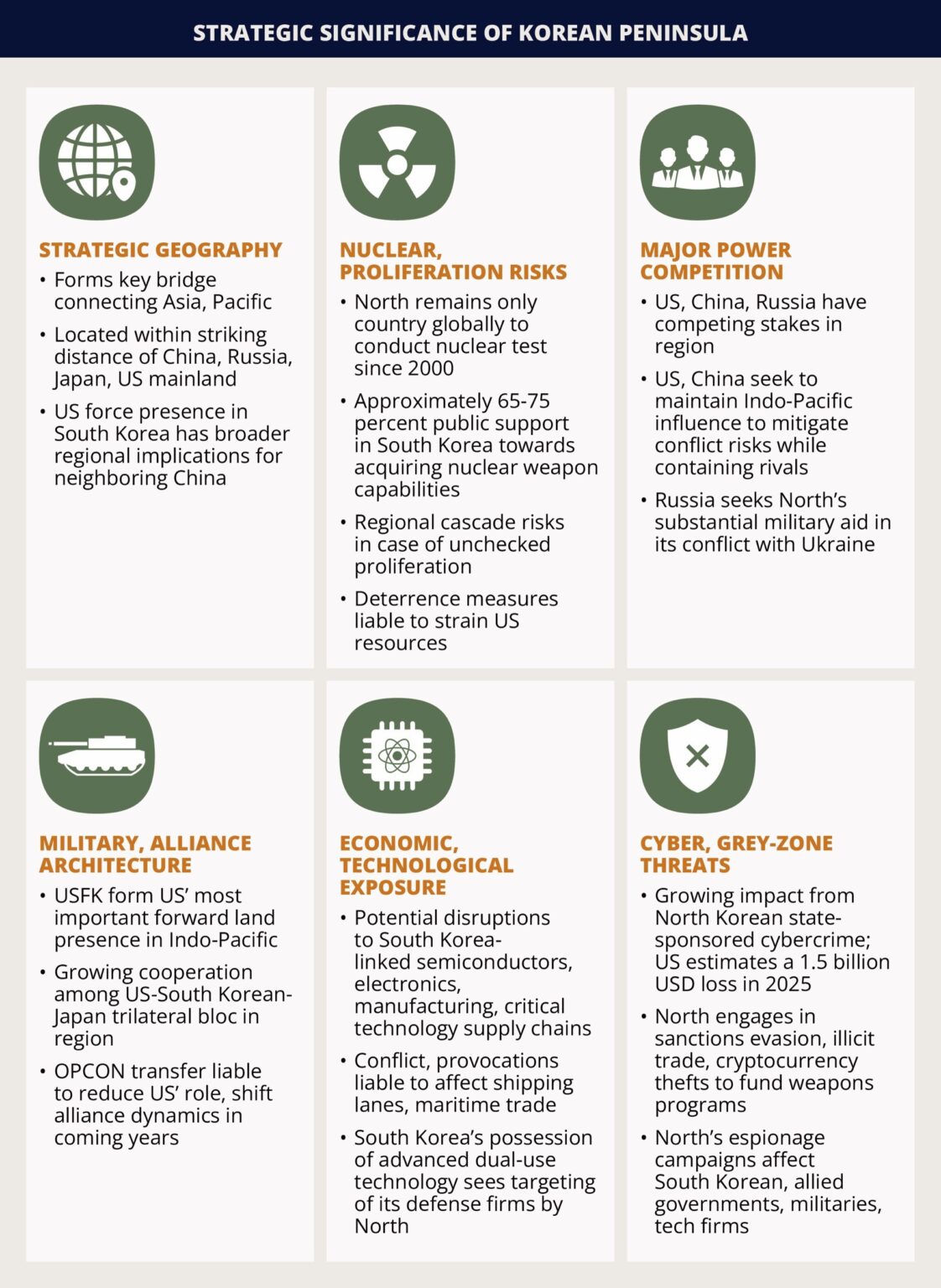
The Korean Peninsula is a key geopolitical flashpoint, with developments in the region heavily interlinked with global trade, supply chains, critical technologies, and major power competition. South Korea’s central role in semiconductors, electronics, automotive, shipbuilding, and advanced manufacturing necessitates active monitoring of the region for businesses with regional exposure. Per 2024 estimates, a full-scale conflict on the peninsula would cost the global economy approximately four trillion USD in the first year, representing 3.9 percent of the global GDP. The peninsula’s significance is also underscored by competing major power interests, particularly the US and China, while Russia appears to be increasingly invested in the region amid its growing partnership with the North.
The latest deterioration in inter-Korean relations largely began following the breakdown of US-North Korean talks in 2019. This was followed by a further degradation in ties amid Seoul’s adoption of a hardline stance regarding its northern neighbor under the conservative leadership of former President Yoon Suk Yeol, as well as Pyongyang’s acceleration of its nuclear program in 2023. Since then, inter-Korean communication channels and the 2018 Comprehensive Military Agreement (CMA), which had successfully regulated military activity along the border, remain suspended. Pyongyang officially adopted the “two hostile states” policy via fresh constitutional revisions in March. The North has also accelerated its military modernization plans, seeking to rapidly develop capabilities across nuclear, naval, and conventional defense domains. On the other hand, following the election of the Democratic Party of Korea’s (DPK) Lee Jae Myung as South Korean president in June 2025, Seoul has pivoted its stance, with greater emphasis on de-escalating tensions with Pyongyang. Despite this more amenable disposition, Seoul has continued to bolster its domestic military capabilities to counter perceived threats arising from the North’s rapid military modernization push.
Inter-Korean Dynamics
North Korea
-
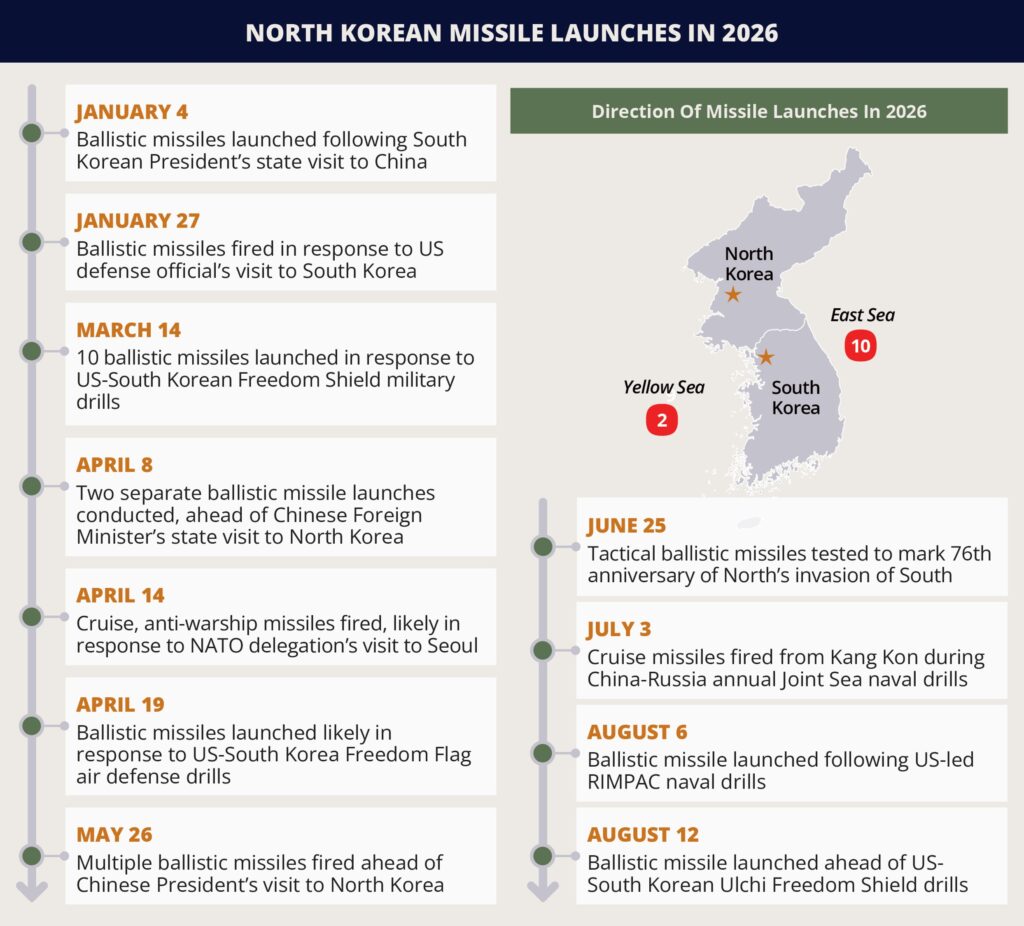
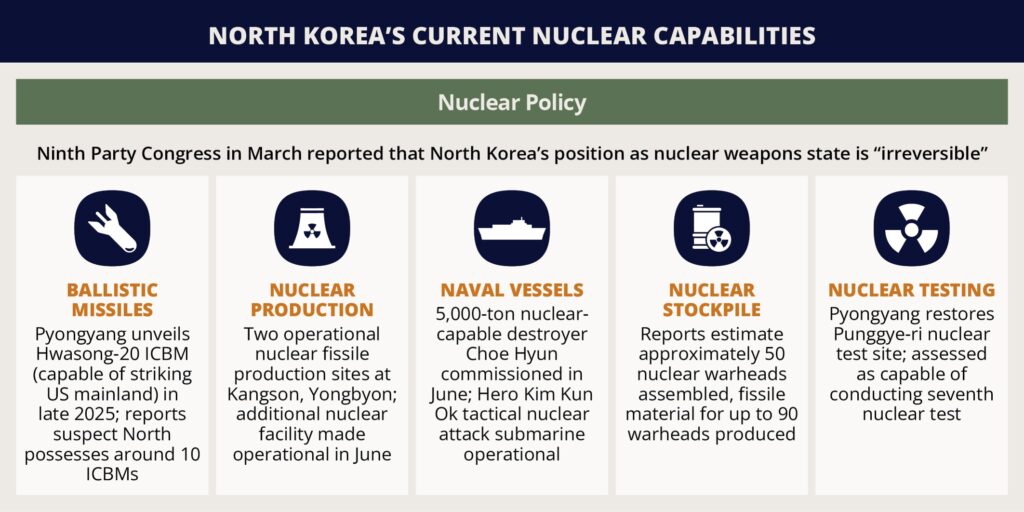
Pyongyang’s inter-Korean strategy can be broadly characterized by its pursuit of military expansion, both conventional and nuclear, while remaining below the threshold of triggering a kinetic conflict. Pyongyang’s prioritization of its nuclear capabilities was evidenced at the Ninth Party Congress in February where officials announced that Pyongyang will focus on “exceptional” military build-up across nuclear and conventional military domains during the 2026-2030 term. To this end, the North has sustained its missile test launches in 2026, numbering at least 12 as of writing, and is actively building its first dedicated nuclear-powered submarine as announced in late 2025, alongside its multiple recently bolstered nuclear capabilities. This shows that Pyongyang likely seeks to solidify its deterrent capability against perceived threats from Japan, South Korea, and the US by expanding its strategic weapons program.
-
In parallel, Pyongyang appears to be balancing its nuclear development with the strategic imperative to avoid unilaterally escalating tensions, given the high diplomatic, economic, and political costs armed hostilities would engender. This is evident from the lack of major military flare-ups, even at the peak of inter-Korean tensions since 2023, and amid domestic political turmoil in the South between 2023-2025. Pyongyang’s apparent restraint toward the South is likely driven by concerns that military confrontation would trigger expanded US sanctions, as well as other deleterious impacts such as potential US military action on the peninsula. A kinetic conflict would also likely negatively affect North Korea’s trade with neighboring China and Russia, potentially generating domestic instability.
-
Politically, Pyongyang appears to be institutionalizing its shift away from unification with the South, a move likely intended to legitimize domestic military expansion, solidify alignment with Moscow and Beijing, and marginalize Seoul’s role in any future high-stakes diplomacy. The North’s constitutional revisions in March, which redefine North Korea’s borders and eliminate references to unification, build directly on the “two hostile states” doctrine established in 2023-2024. Internally, framing the South as an existential threat is likely aimed at justifying continued nuclear advancement and bolstering regime legitimacy. FORECAST: Externally, this shift is expected to allow North Korean leader Kim Jong Un to deepen economic and technological ties with China and Russia, while affording Kim greater autonomy to pursue direct negotiations with Washington, effectively bypassing Seoul.
-
FORECAST: North Korea’s restrained posture regarding the South is expected to continue over the coming period. This is largely due to Pyongyang’s deepening economic and strategic dependence on Beijing and Moscow, which raises the cost of any escalation that would disrupt those relationships. However, this structural constraint is likely to remain tied to the status of the Russia-Ukraine conflict, with a ceasefire in Eastern Europe liable to significantly reduce North Korea’s utility to Moscow, leaving Pyongyang more isolated. North Korea’s growing trade ties with China, likely a primary factor in its reported 3.5 percent economic growth in 2025, are also expected to act as an additional restraint on Pyongyang’s appetite to absorb any major regional disruptions.
South Korea
-
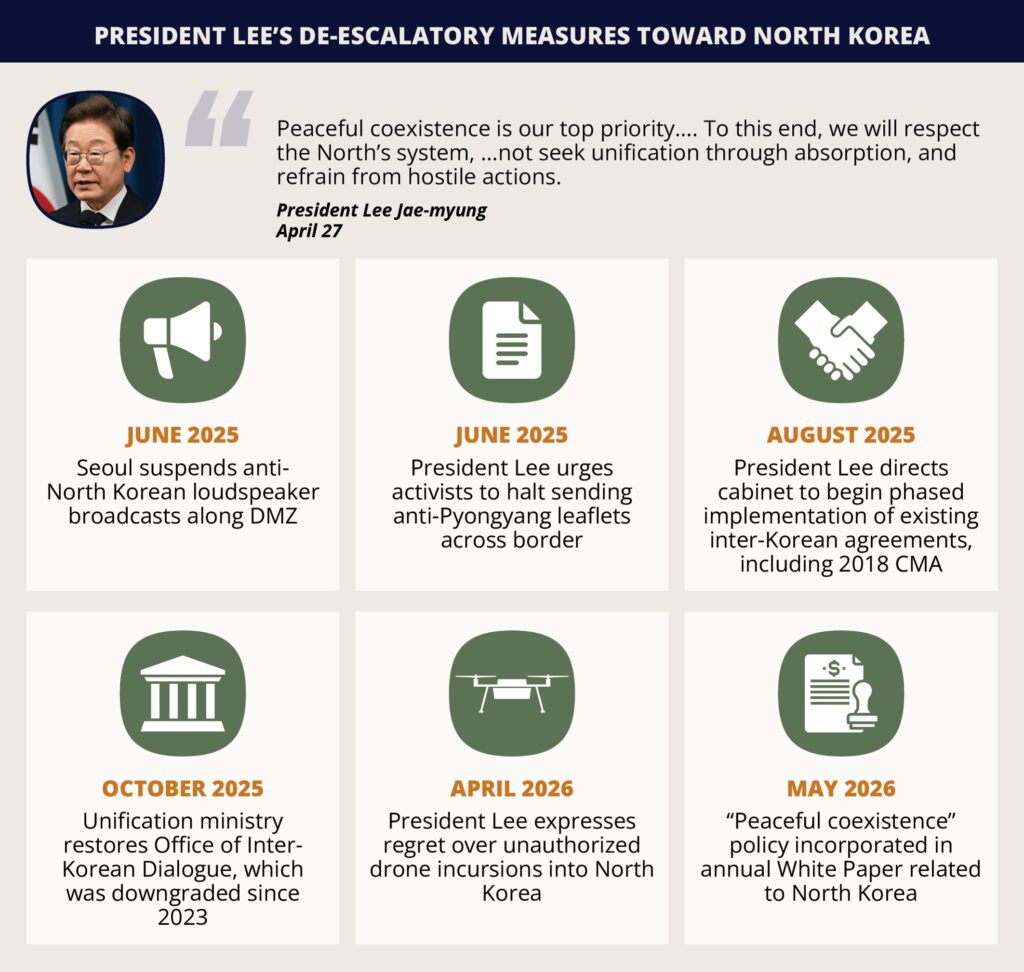
South Korea’s inter-Korean policy under President Lee appears to prioritize managing immediate inter-Korean tensions ahead of achieving longer-term South Korean goals like denuclearization. To this end, President Lee’s government likely uses strategic conciliatory signals to revive the potential for North-South dialogue, while navigating anti-North sentiments domestically. For example, the South Korean Unification Ministry’s use of rhetoric like “peaceful coexistence” and “two-state relationship aimed at peaceful reunification” in a white paper released in May underscores efforts to defuse tensions with the North by projecting a conciliatory stance aimed at resuming inter-Korean dialogue. President Lee’s seeming reluctance to adopt a “peaceful two-state” framework, which would treat the Koreas as separate sovereign states rather than temporarily divided entities, reflects domestic divisions in the South as well as constitutional constraints, given that it includes a unification mandate.
-
Simultaneously, Seoul is also seeking to bolster its domestic military capabilities, driven by various factors like deterring potential attacks from the North, while also reducing defense dependence on Washington. The latter motivation is especially pertinent with the US appearing to deprioritize the region, as evident in the US National Defense Strategy released in January stating that Seoul would bear the primary responsibility for countering North Korean threats, with the US providing “critical but more limited support.” Under President Lee, Seoul has prioritized its plans to expedite wartime Operational Control (OPCON) transfer, under which South Korea would assume full command of its own forces during wartime, a role currently held by the US as part of the combined command structure. Seoul has also strengthened defense acquisitions such as the reported nuclear-powered submarine and missile packages, increased defense spending by up to 7.5 percent in the 2026-2027 fiscal year, and expanded defense cooperation with regional allies like Japan.
-
South Korea also maintains a calibrated approach in dealing with China and Russia so as to avoid completely alienating them, given their strategic involvement with the North. This was evident during President Lee’s state visit to China in January, where he emphasized seeking a “new phase” in ties with Beijing. Similarly, Seoul identified Russia as one of the four major powers alongside China, Japan, and the US that it seeks to enhance relations and pursue stable ties with over the coming term, as part of President Lee’s key diplomatic priorities published in September 2025. Additional US-South Korea summits, of the kind held in August 2025, remain a key mechanism through which Seoul would likely try to advance its longer-term denuclearization objectives. Seoul’s sustained diplomatic engagement with Washington reflects the priority it places on dialogue with the US as its principal channel for resolving tensions with the North.
-
FORECAST: Seoul is expected to persist with its more conciliatory approach vis-a-vis Pyongyang for the remainder of President Lee’s term, which expires in June 2030, irrespective of whether this stance is reciprocated by North Korea in that period. This is given that President Lee’s “peaceful coexistence” policy is supported by 59.2 percent of South Koreans, per an April opinion poll. A return to power by a more conservative government would likely reverse this trajectory, given the opposition People Power Party’s more hawkish posture toward Pyongyang, likely reverting Seoul to a harder line on inter-Korean engagement. In the interim, Seoul is anticipated to continue to develop its conventional military capabilities, aligning with its need to deter Pyongyang from taking unilateral provocative actions, as well as to fulfill US requests that Seoul take on a greater defense burden.
Geopolitical Dynamics
US and Allies
-
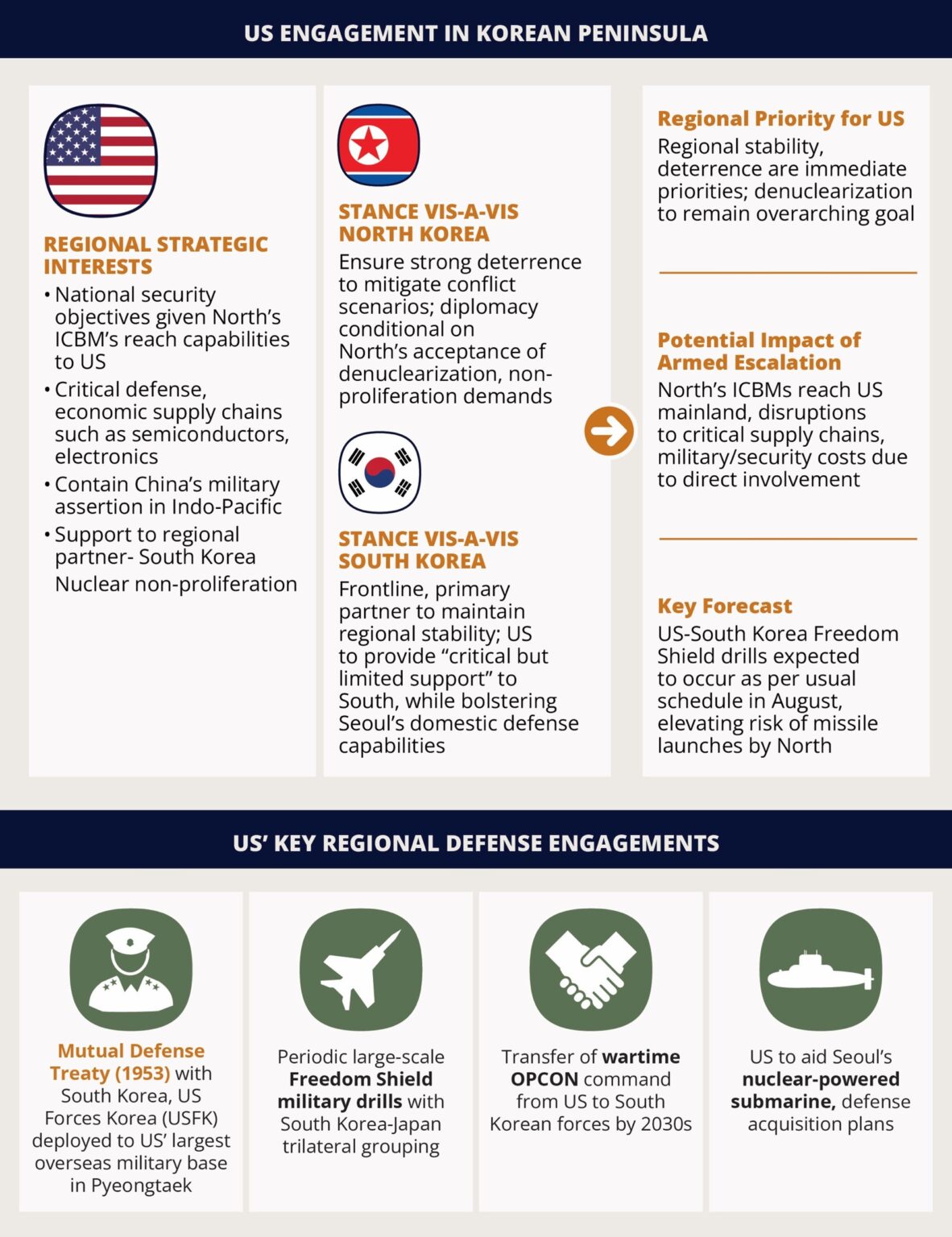
Washington appears to be increasingly relying on South Korea and the trilateral framework with Japan to sustain deterrence against North Korea. This is amid competing US engagements elsewhere, particularly conflicts in the Middle East, limiting its bandwidth to focus on the peninsula. Washington’s push for Seoul to assume primary responsibility for deterring North Korean conventional threats, while the US seemingly concentrates its regional posture on China, has accelerated alliance recalibration, including deeper defense industrial cooperation and progress on wartime OPCON transfer. Coupled with Pyongyang’s reiterated position that any dialogue will require recognition of its nuclear status, these constraints are likely to hinder meaningful momentum toward renewed Washington-Pyongyang talks in the near term.
-
Meanwhile, Seoul and Tokyo’s increasingly close ties likely stem from their mutual need to compensate for the US’ shifting priorities. For Tokyo, cooperation with Seoul also provides regional support in navigating geopolitical uncertainties stemming from strained China-Japan ties, as well as a potential Taiwan conflict scenario. Japan and South Korea have grown increasingly close as part of the shuttle diplomacy framework between President Lee and Japanese Prime Minister Sanae Takaichi, including regular high-level interactions. South Korea and Japan are likely seeking to institutionalize bilateral security dialogue outside of the trilateral defense framework with the US, given their geographical proximity to North Korea-related threats. FORECAST: Seoul is expected to bolster bilateral defense engagements and drills with Tokyo in the coming months, as reflected in the June resumption of the joint maritime search and rescue exercise (SAREX) between the two, suspended since 2018. However, the extent of such a partnership will remain limited given historical grievances persisting between the two countries, resulting in a restrained pursuit of full-fledged defense collaboration.
China
-
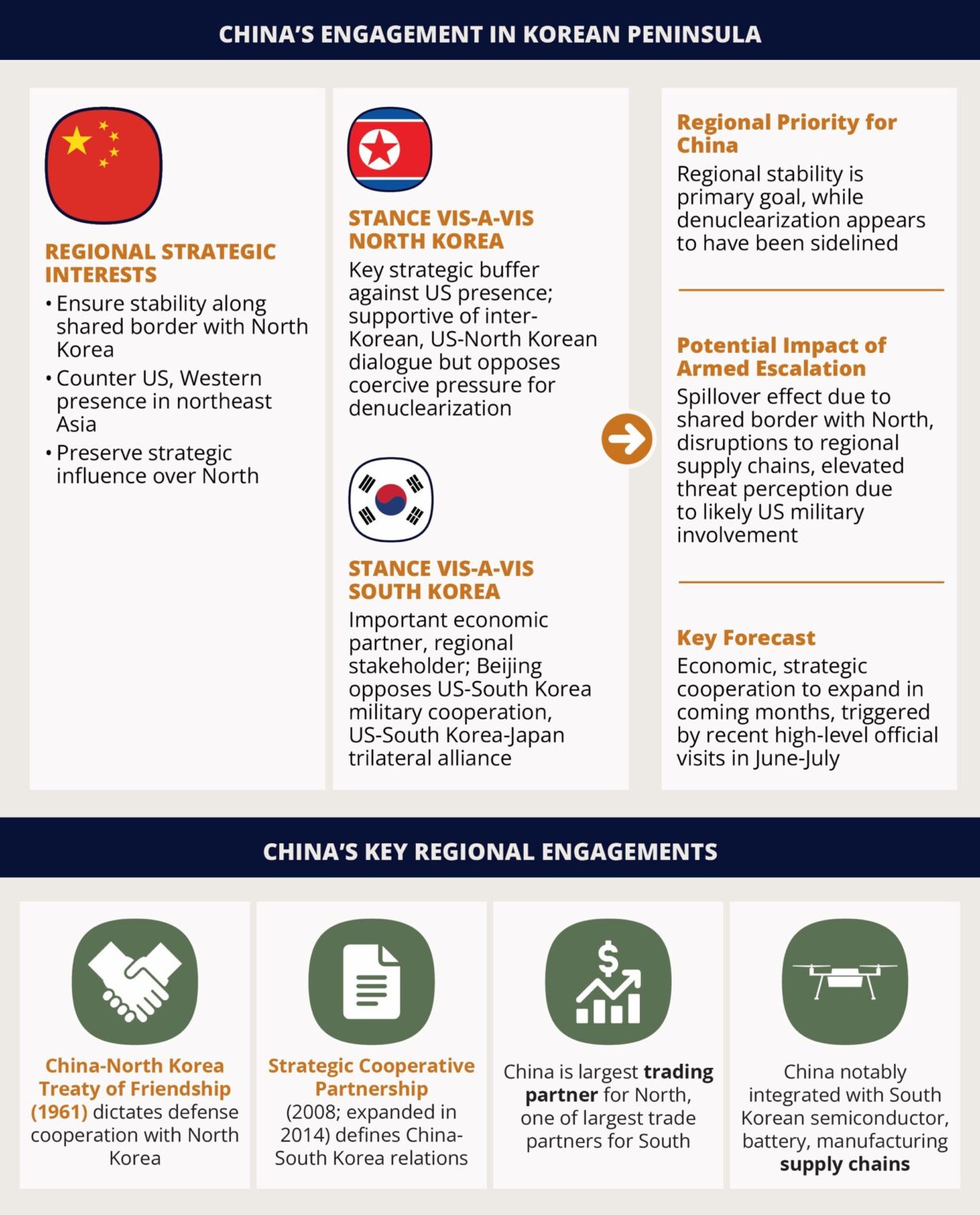
Beijing’s prioritization of regional stability over its official policy of pursuing North Korean denuclearization has seemingly intensified since 2023, as reflected in the growing absence of denuclearization rhetoric in official statements and bilateral readouts in that period. This reflects China’s calculation that an armed conflict on the peninsula would risk drawing US military presence closer to the China-North Korea border, which Beijing likely perceives as a significant national security threat. This concern is compounded by the potential impact on China’s domestic stability that a conflict would likely entail, due to its shared border with the North and the disruption of trade and South Korea-linked supply chains. This calculation is reinforced by Beijing’s own economic headwinds since 2020, which elevate domestic stability as a near-term key priority for China.
-
Seoul and Pyongyang both retain a strong interest in engaging with Beijing, given China’s status as their largest trading partner and its substantial influence in maintaining regional stability. As such, South Korea is likely to avoid involvement in regional issues considered sensitive to Beijing, including those concerning Taiwan and the South China Sea, given that Beijing’s regional stability priorities somewhat overlap with Seoul’s own. FORECAST: This policy is expected to prompt deeper cooperation between Beijing and Seoul in the medium term, particularly regarding supply chain stability and critical minerals, even as Beijing maintains its aforementioned strategic partnership with Pyongyang.
-
China’s ties with Pyongyang are also framed by Beijing’s desire to maintain influence over Pyongyang amid the latter’s growing cooperation with Moscow. This was evident during Chinese President Xi Jinping’s visit to Pyongyang on June 8-9, where he emphasized strengthening strategic ties with the North to safeguard common interests. FORECAST: Beijing is likely to avoid a formal grouping with North Korea and Russia, amid its likely perception that a formalized trilateral alignment would provide Washington greater justification to accelerate its trilateral deterrence cooperation with Seoul and Tokyo, thereby weakening China’s own security posture in the region. Nonetheless, Beijing is expected to remain Pyongyang’s key economic supporter, likely seeking to retain its influence over the country’s military and nuclear decisions. As part of this, Beijing is unlikely to place heavy emphasis on denuclearization goals, such as through coercive rhetoric or expanded sanctions, given the risk that doing so could strain ties with Pyongyang and push it toward deeper reliance on Moscow.
Russia
-
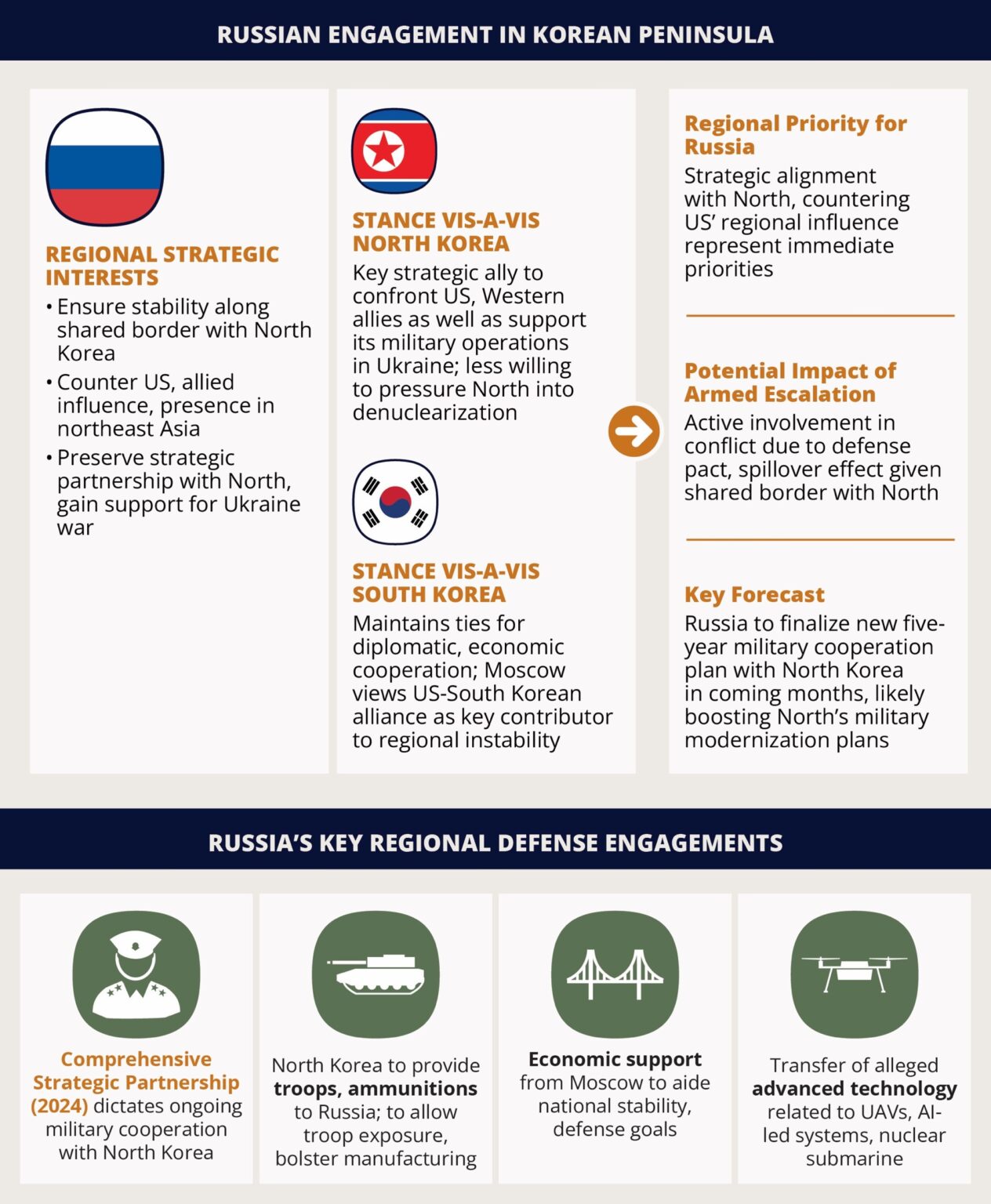
Relations between North Korea and Russia, anchored by the 2024 Comprehensive Strategic Partnership (CSP), have significantly expanded in recent years to include deeper military cooperation and increased trade. Their cooperation is driven by each country’s distinct but overlapping geopolitical needs. Moscow faces acute manpower and ammunition shortfalls stemming from its protracted war in Ukraine and is likely seeking assistance to circumvent Western sanctions to sustain its war economy. Pyongyang, meanwhile, seeks advanced military technology, economic support, and diplomatic cover to offset its own resource constraints and international isolation.
-
This has produced a transactional arrangement in which Russia has reportedly received large volumes of artillery shells and short-range missiles from North Korea, along with North Korean troop deployments to front-line sectors in Ukraine since 2024. North Korea is reportedly slated to provide between 30,000-50,000 troops to Russia in the coming period, per a statement by the Ukrainian President Volodymyr Zelenskyy on August 10, and North Korean-developed ballistic missiles have reportedly been deployed by Russia since 2023. In exchange, Pyongyang has reportedly received advanced military technology, energy products, and food, helping to sustain Pyongyang’s weapons programs and domestic stability. Pyongyang has also capitalized on its ties with Moscow to reduce its international isolation and secure Russia’s political backing at the UN Security Council (UNSC).
-
FORECAST: This partnership is likely to significantly undergird North Korea’s military modernization plans in the long term. This dynamic is reflected in ongoing talks between Pyongyang and Moscow to finalize a new five-year military cooperation plan for 2027-2031, as announced during the Russian defense minister’s visit to North Korea in April. Alongside battle experience for North Korean troops, advanced technology transfer is likely to expedite Pyongyang’s incorporation of advanced UAVs, nuclear development, and electronic warfare systems into its arsenal. The Tumen River road bridge, constructed on the North Korean-Russian border and slated to be made operational later in 2026, is also expected to provide Pyongyang with increased trade and transit advantages, including defense supplies and logistics.
Recommendations
-
We advise against nonessential travel to North Korea due to the uncertain security situation, extensive surveillance, and the country’s strict laws affecting visitors.
-
Travel to South Korea, including Seoul, can continue at this time while adhering to standard security protocols.
-
During periods of armed escalation between North and South Korea, we advise against all nonessential travel to the vicinity of the Demilitarized Zone (DMZ).
-
In the event of a projectile landing closer to the South Korean or Japanese mainland, remain cognizant of authorities’ alerts regarding taking shelter.