


MAX Protection: Emergency Preparedness Planning for FIFA World Cup 2026 Operations
- MAX Security
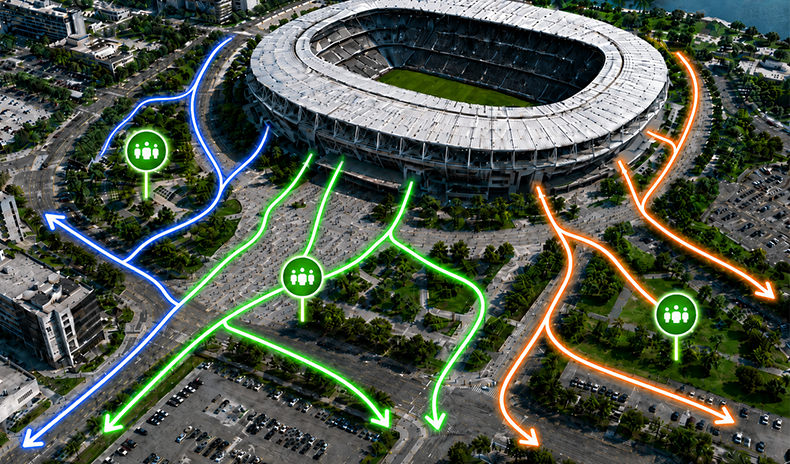
This case study outlines how MAX Security supported a leading global beverage company and FIFA World Cup 2026 sponsor in strengthening its emergency preparedness by delivering venue-specific assessments, clear post-perimeter movement plans, and practical protocols to guide executives, staff, and guests during high-density event operations.
Overview
Ahead of FIFA World Cup 2026, MAX supported a global beverage company and event sponsor with emergency preparedness planning across six U.S. host venue environments. The engagement focused on preparing practical guidance for the movement, assembly, and emergency response of the company’s executives, staff, and guests outside FIFA-controlled perimeters.
The Challenge
FIFA World Cup 2026 is expected to create complex operating conditions around host venues. High spectator volumes, expanded security perimeters, transportation pressure, rideshare congestion, road closures, and dense pedestrian movement may all affect how executives, staff, and guests move during an emergency.
The key planning gap was post-perimeter movement. Official stadium evacuation procedures may address what happens inside the controlled venue environment, but corporate personnel still need clear direction once they exit into crowded streets, transport hubs, commercial zones, and restricted access areas.
The client needed to understand which routes were viable, where personnel could assemble, what areas could become congested, and how movement could be managed under high crowd-density conditions.
This type of planning is part of MAX’s broader Executive & Traveler Management support, helping organizations coordinate movement, protection, and response for executives, personnel, and guests in complex environments.
MAX’s Approach
MAX conducted on-ground assessments across six FIFA World Cup 2026 host venue environments, with each assessment focused on practical movement outside FIFA-controlled areas.
The work included:
-
Reviewing evacuation routes outside FIFA-controlled areas
-
Identifying assembly and evacuation points
-
Validating route clarity, accessibility, and feasibility under high crowd density
-
Assessing post-perimeter movement options
-
Identifying gaps and improvement opportunities
-
Developing simple action protocols for key emergency scenarios
Key Findings
Across the six venues, MAX identified recurring external movement challenges that could affect personnel during FIFA World Cup 2026 operations. These included restricted pedestrian corridors, transportation bottlenecks, crowd convergence points, rideshare congestion, limited vehicle access near venues, and the need for pre-identified regrouping locations away from immediate crowd pressure.
The assessments reinforced that emergency planning cannot stop at the venue exit. In high-density event environments, the period after personnel leave the controlled perimeter may create the greatest uncertainty.
The Result
MAX delivered a practical emergency preparedness framework tailored to the client’s FIFA World Cup 2026 operations.
Deliverables included:
-
Six venue-specific emergency plans
-
Evacuation guidance for personnel outside each stadium perimeter
-
Assembly point recommendations
-
Simple action protocols for key scenarios
-
A summary of key findings and recommendations
-
A pre-recorded security briefing covering key risks, emergency procedures, and expected behavior during incidents
The client received clear, site-specific guidance to support personnel movement, reduce uncertainty, and improve decision-making across multiple FIFA World Cup 2026 host venue environments.
Planning for major event operations? MAX supports organizations with Physical Security Risk Assessments that identify exposure points, validate movement options, and translate site conditions into practical emergency planning.
THE MAX MONTHLY
Get actionable intelligence, expert analysis, & key event updates straight to your inbox.
Sign up →